x
Köszönjük a regisztrációt!
Hamarosan küldjük Önnek a visszaigazolást a megadott e-mail címre.
Addig is, kérjük ossza meg oldalunkat az alábbi lehetőségek egyikén, hogy minél többen értesüljenek a rendezvényünkről!
An international forum for leaders addressing interconnected crises, systemic challenges, the imperative for a new approach, collaborative solutions, and adapting to inevitable consequences.
Click on the picture!

United Kingdom

Ireland

Finland

Hungary

Hungary

Hungary

Hungary

Hungary

Hungary
DAY 1 – 19th April 2024, Friday – Venue: Education Center, Zoltán Magyary Auditorium
| TIME | PROGRAM |
|---|---|
| 08:00 – 09:00 | Registration |
| 09:00 – 10:15 | Opening and Plenary Session I. |
| 09:00 – 09:05 | Dr. Gergely Deli rector, National University of Public Services |
| 09:05 – 09:10 | Dr. Géza Kuminetz rector, Pázmány Péter Catholic University |
| 09:10 – 09:15 | Dr. András Gelencsér rector, University of Pannonia |
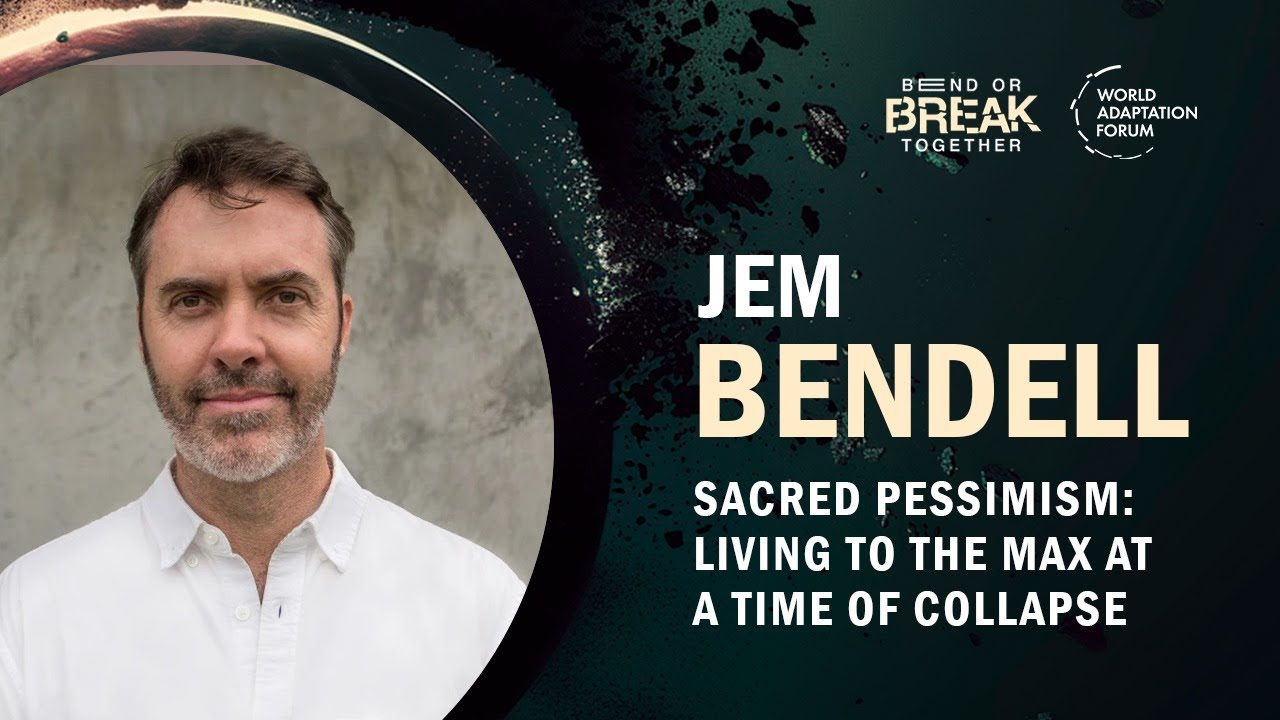
| 09:15 – 09:50 | Jem Bendell – Sacred Pessimism: Living to the Max at a Time of Collapse |
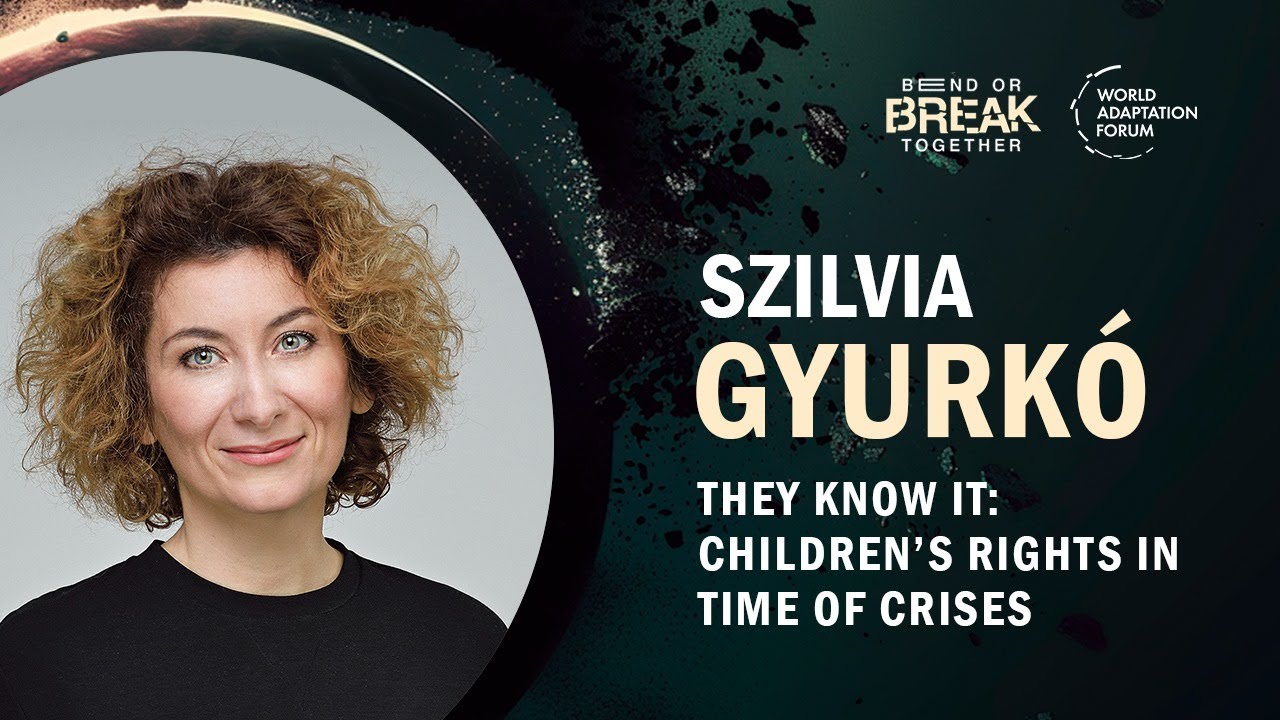
| 09:50 – 10:15 | Szilvia Gyurkó – They Know It: Children’s Rights in Time of Crises |
| 10:15 – 10:45 | Coffee Break |
| 10:45 – 12:00 | Plenary Session II. |
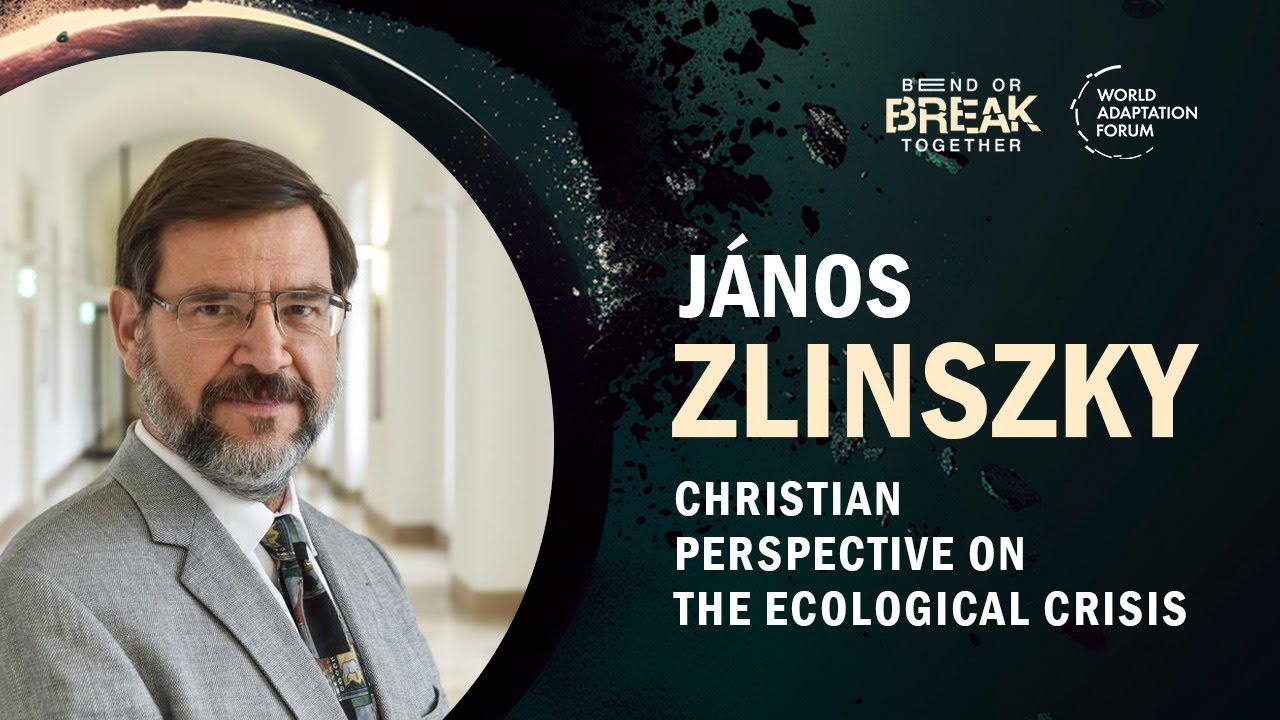
| 10:45 – 11:10 | János Zlinszky – Christian Perspective on the Ecological Crisis |
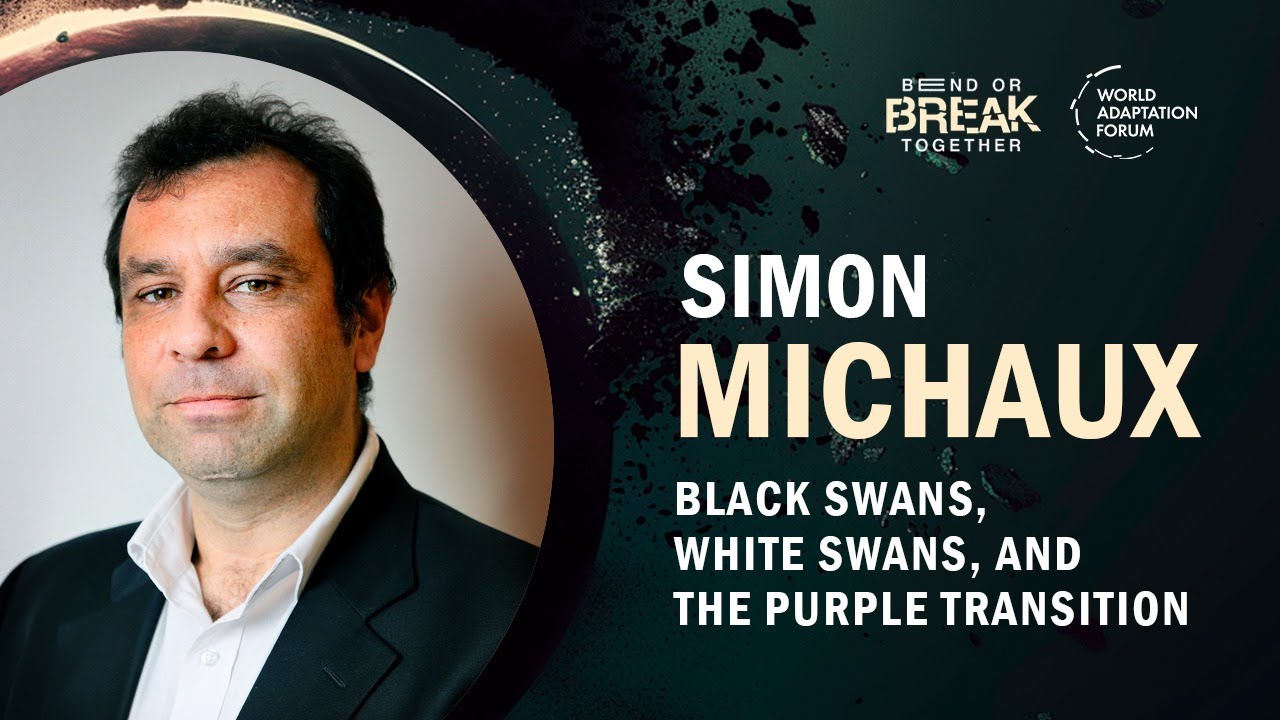
| 11:10 – 11:35 | Simon Michaux – Black Swans, White Swans, and the Purple Transition |
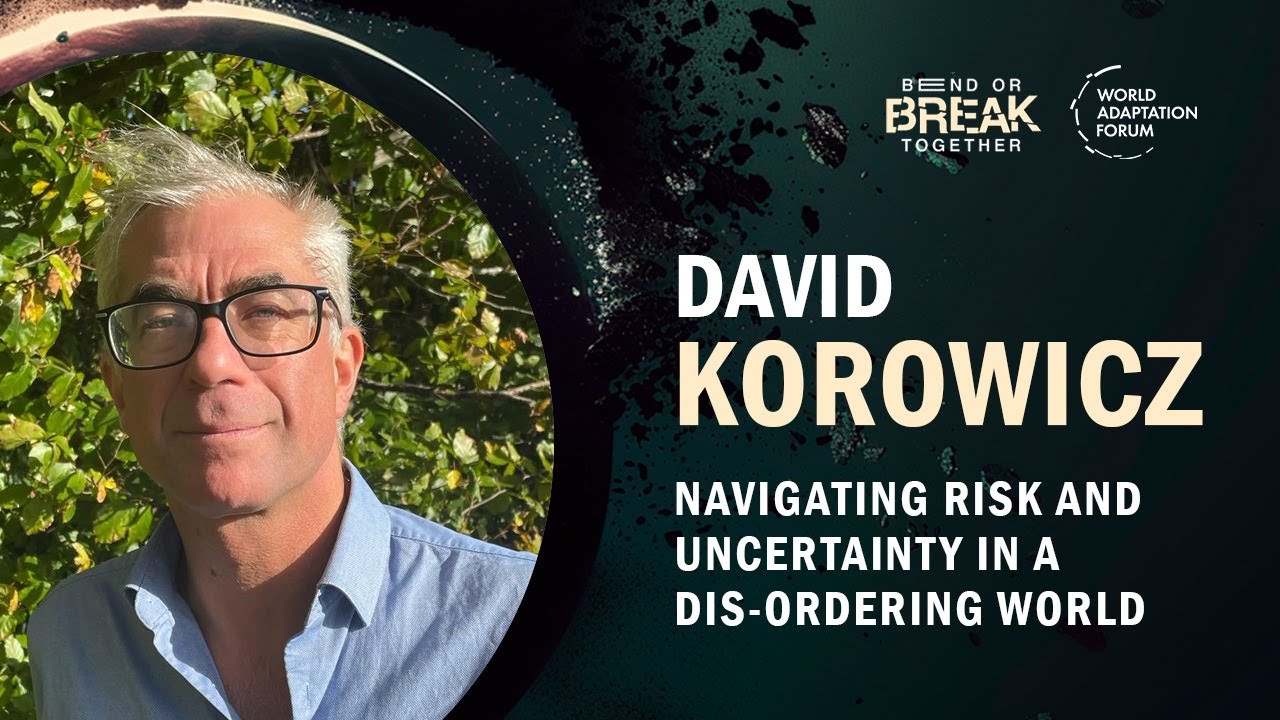
| 11:35 – 12:00 | David Korowicz – Navigating Risk and Uncertainty in a Dis-ordering World |
| 12:00 – 13:30 | Lunch Break |
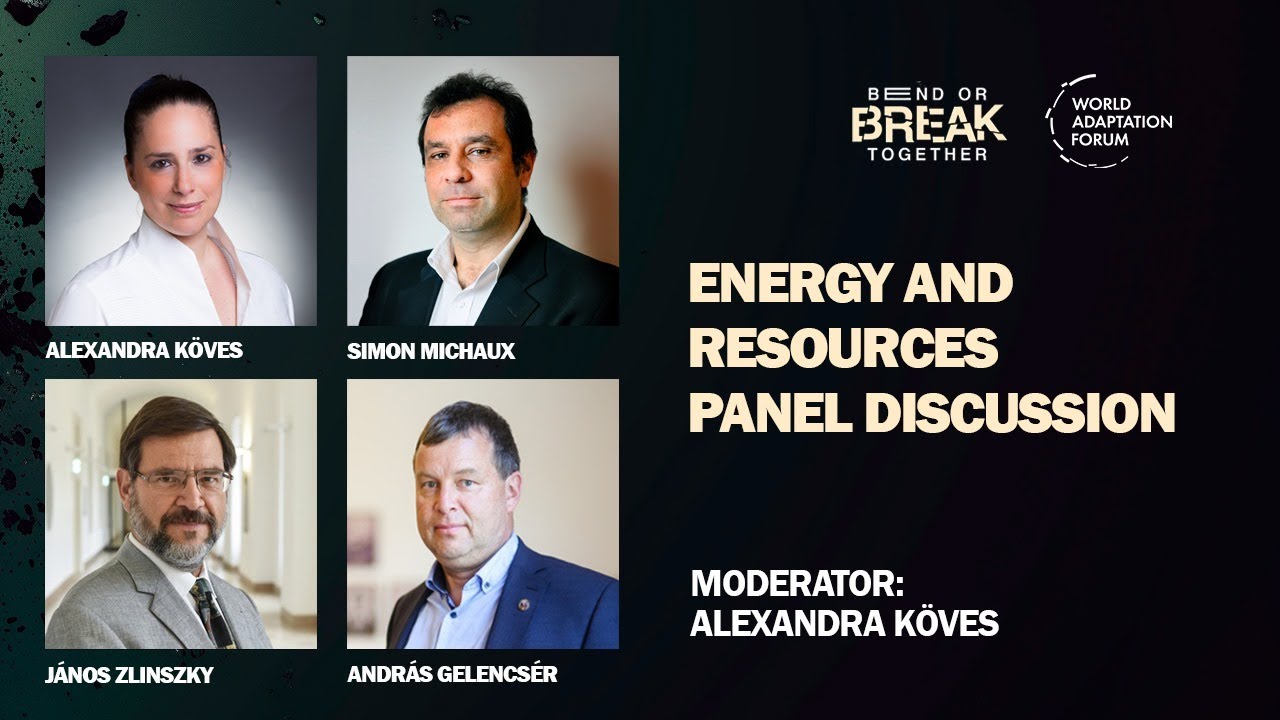
| 13:30 – 15:00 | Panel I. – Energy and Resources – Moderator: Alexandra Köves |
| 13:30 – 13:40 | János Zlinszky – statement |
| 13:40 – 13:50 | András Gelencsér – statement |
| 13:50 – 14:00 | Simon Michaux – statement |
| 14:00 – 15:00 | Panel Discussion (Q&A) |
| 15:00 – 15:30 | Coffee Break |
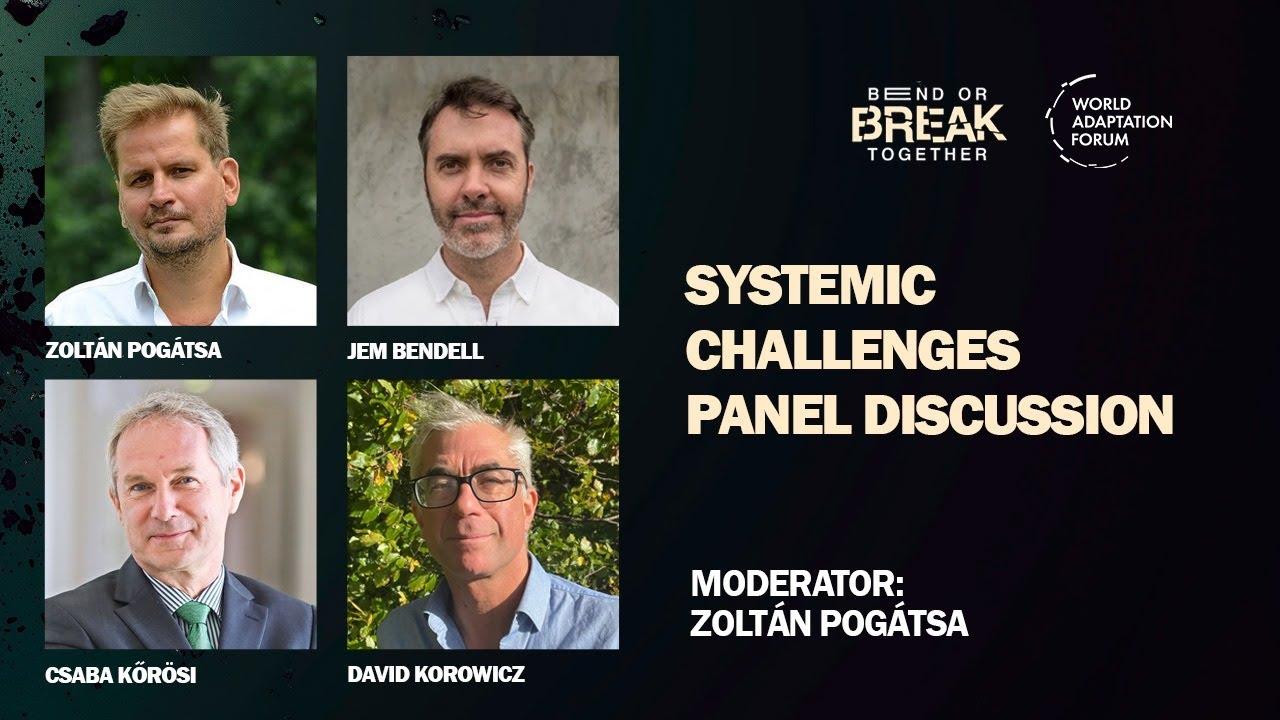
| 15:30 – 17:00 | Panel II. – Systemic Challenges – Moderator: Zoltán Pogátsa |
| 15:30 – 15:40 | Csaba Kőrösi – statement |
| 15:40 – 15:50 | David Korowicz – statement |
| 15:50 – 16:00 | Jem Bendell – statement |
| 16:00 – 17:00 | Panel Discussion (Q&A) |
DAY 2 – 20th April 2024, Saturday – Venue: Education Center, Hallway & Terrace
| TIME | PROGRAM |
|---|---|
| 10:00 – 11:00 | Jem Bendell: Breaking Together – book launch and dedication |
| 11:00 – 13:00 | Matthew Slater: The Trading Floor Game – workshop |
| 13:00 – 14:00 | Lunch Break |
| 14:00 – 17:00 | JEMboree – Deep Adaptation 5th Anniversary Celebration |
Szilvia Gyurkó – Founder and Director of On A Rocking Horse Child Rights Foundation
Szilvia Gyurkó is a freelance child rights consultant and researcher based in Hungary. She develops and implements training and research projects in several European countries and publishes articles on child rights in online and print media. Between 2012-2014 she worked as the Director of the Hungarian Committee for the Rights of the Child at UNICEF. She then worked as a consultant for the Eastern Europe regional office of the Swiss-based international children’s relief organisation Terre des Hommes. She currently heads the On A Rocking Horse Child Rights Foundation-ECPAT Hungary, which develops programmes on children’s rights, child participation and child protection. She is also a doctoral student in social innovation design at the MOME Doctoral School.
Zoltán Pogátsa – Associate Professor at the University of West Hungary
Zoltán Pogátsa is an economist, sociologist and expert in international political economy. Associate professor at the University of West Hungary, lecturer at the Central European University, ELTE and the University of Verona and Between 2005 and 2015 he was a member of the Regional Competitiveness Research Group of the Hungarian Academy of Sciences. In 2013, he was awarded a Greek State Scholarship to study the Greek crisis in Athens, and has published a book summarising the results of his work. He lectures on topics such as the economics of European integration, international political economy, the economics of Central Europe, EU policies. His research interests include European integration, with a special focus on peripheral countries.
Csaba Kőrösi – President of the United Nations General Assembly
Csaba Kőrösi joined the Ministry of Foreign Affairs in 1983 and served in various countries, including Greece, Israel and Libya. He was also the Permanent Representative of Hungary to the United Nations and served as vice-president of the General Assembly from 2011 to 2012. He was Deputy State Secretary responsible for security policy, multilateral diplomacy and human rights before being appointed Director of Environmental Sustainability in the Office of the President of Hungary. From 2022 to 2023 he served as President of the United Nations General Assembly for its 77th session. He is a recipient of the Hungarian Order of Merit. He was also awarded the Order of Merit of the Republic of Poland, the Sovereign Military Order of Malta and the Greek Order of the Phoenix.
János Zlinszky – Associate Professor at the Péter Pázmány Catholic University
János Zlinszky is Senior Advisor at the Institute for the Integrity of Creation, Péter Pázmány Catholic University, and emeritus associate professor in sustainability science, environmental policy and water diplomacy with PPKE and NKE. He serves on the advisory Boards of the Equilibrium Institute, and the Ludovica College (both in Budapest). During the development of the Sustainable Development Goals, he served as senior scientific adviser for the Co-Chair of the UN Open Working Group. His earlier positions include European Parliament Delegate Member of the Board and the Bureau of the European Environment Agency (EEA); Head of Department for Strategy and Research in the Office of the Parliamentary Commissioner for Future Generations, Hungary.
Alexandra Köves – Associate Professor at the Corvinus University of Budapest
She is an ecological economist, associate professor at the Corvinus University of Budapest, head of the Research Centre for Ecological Economics at the Corvinus Institute of Advanced Studies. In her teaching and research, she focuses on topics related to ecological economics, Degrowth and decision sciences, seeking opportunities to create a radically different, ecologically sustainable and socially just economy. She tries to popularize this research field to a wider audience. She hosts a Hungarian podcast called „Zöld Egyenlőség” with now more than 160 episodes, and is also the founder and co-host of the English-language podcast Economics for Rebels. She is also vice-president of the European Society for Ecological Economics.
András Gelencsér – Rector of the University of Pannonia
András Gelencsér is an air chemist, professor, corresponding member of the Hungarian Academy of Sciences, rector of the University of Pannonia, and internationally renowned researcher on the links between air pollution and climate change. His main research interests are atmospheric chemistry related to air pollution and climate change, in particular atmospheric aerosol chemistry. He was the first to identify the process of humus formation in the atmosphere. His article with the director of the Max Planck Institute for Biogeochemistry has become one of the most cited publications in the field. He published a monograph on carbonic aerosol in the Dutch Springer. To date, more than 4200 independent references have been made to his scientific papers.
David Korowicz – Director of Risk and Response at the Geneva Global Initiative
For nearly 20 years David has worked as an analyst and consultant on human systems ecology, emerging large-scale systemic risk, and societal response strategies. Areas of research included societal vulnerability, de-stabilisation and collapse dynamics, integrated global risk, and preparedness and planning. As a consultant he’s worked on a range of projects including the socio-economic impacts of severe pandemics, and exercise/ simulation/ process design to investigate catastrophes and preparedness. As director of Risk and Response at the Geneva Global Initiative he explored with senior political, contingency, military and other officials from a range of countries their capacity to address mounting global challenges including catastrophic irreversible disruption. David is a physicist by training.
Simon Michaux – Associate Professor at the Geological Survey of Finland
As an Associate Professor of geometallurgy at the Geological Survey of Finland (GTK) in KTR, the Circular Economy Solutions Unit, he holds a Basic degree in Bach App. Sc in Physics and Geology and a Ph.D. in Mining Engineering from JKMRC University of Queensland. With 18 years of work experience in the Australian mining industry focusing on research and development, 12 months in the private sector at Ausenco, and 3 years in Belgium at the University of Liege researching Circular Economy and industrial recycling, he brings a wealth of knowledge. His long-term objectives involve the transformation of the Circular Economy into a more practical system for the industrial ecosystem, addressing the twin challenges of technology mineral scarcity and the transition away from fossil fuels.
Jem Bendell – Professor Emeritus at the University of Cumbria
Before the summer of 2023, he held the position of a full Professor of Sustainability Leadership and served as the Founder of the Initiative for Leadership and Sustainability (IFLAS) at the University of Cumbria. Additionally, he was the Founder of the Deep Adaptation Forum and the co-Founder of the International Scholars’ Warning on Societal Disruption and Collapse. A significant transformation in his career commenced in 2017 as he took a year out to study the latest climate science and released the Deep Adaptation paper, which gained widespread attention. His latest book, „Breaking Together,” was published in 2023 and provides a comprehensive approach to the systemic challenges humanity faces in the upcoming years.
Juan García Martínez – Research Manager at Alliance to Feed the Earth in Disasters
Juan Bartolomé García Martínez is a resilience researcher focused on global catastrophic food-system failure. Holding a Master’s degree in Chemical Engineering from the University of Twente (Netherlands), he serves as Research Manager at the Alliance to Feed the Earth in Disasters (ALLFED) and co-founded the Observatorio de Riesgos Catastróficos Globales (ORCG). Over more than five years he has led interventions to support societies under civilisation-scale shocks – especially abrupt sunlight-reduction events and cascading supply-chain failures. He has published over 20 scientific papers on resilient food systems and non-agricultural food production, and has advised policy initiatives including national playbooks for nuclear-winter preparedness.
Willem Naudé – Professor at the RWTH Aachen University
Wim Naudé is Professor of the Economics of Innovation, Trade and Development at RWTH Aachen University, Germany, and Adjunct Professor at the University of Coimbra, Portugal. He has previously worked at Maastricht University, United Nations University and Oxford University. His research asks: Will Prometheus’ gift undo the world? The modern economic system, built on technological innovation and cheap fossil fuels, has transformed into a predatory global capitalism marked by inequality, conflict, and ecological overshoot. His latest books – The Economic Decline of the West: Guns, Oil and Oligarchs and Economic Growth and Societal Collapse – weave together his interests in innovation, trade, development and the habitability of a transforming planet.
Roberta Boscolo – Head of the Climate and Energy Unit at the WMO
Roberta Boscolo is a climate and energy scientist with over twenty years of global experience, specialising in the Water-Energy-Food nexus and the scaling of science-based adaptation and mitigation strategies in support of sustainable development. She holds a degree in Physics and an MSc in Physical Oceanography, and completed advanced climate and energy studies in international organisations and leading institutions. Prior to her current role, she served as Chief of the WMO Liaison Office in New York. Recognised among the Global 50 Women in Sustainability and a Top Voice for the Green Economy, she serves on the Expert Advisory Panel of the The Earthshot Prize category “Fix Our Climate” and is a nominee for the LUCE Award for Legacy Women in Energy.
Maya Frost – Adaptation Activist, and Founder of Collapse Forward
Maya Frost is a creative disruptor helping collapse-aware leaders turn dread into depth, discovery, daring, and doing. Inspired by her early experience of profound loss and her pandemic-era pro bono work, she created Doom to Bloom™, a 30-day process that has transformed the lives of those struggling with devastating grief in 20 countries. In the early 2000s, her playful, eyes-wide-open approach to mindfulness was featured in over 150 media outlets worldwide. In 2009, she took on traditional education in the U.S. in her book, The New Global Student. A happy grandmother of six who has lived in seven countries, Maya is deeply committed to facing profound systemic level collapse with rewilded imagination, enlivened engagement, and joyful collaboration.
George Tsakraklides – Scientist, Systems Thinker and Author on Civilisational Collapse
George Tsakraklides is a scientist and author whose work bridges biology, chemistry, and the social sciences to explore the systemic drivers behind civilisational collapse. Trained in molecular biology, chemistry, food science and earth sciences, his early career focused on consumer research and behavioural analysis for major corporations before turning to independent inquiry. His writing challenges long-standing dogmas across economics, science, anthropology and social studies, opening the way to new understandings of the past that can illuminate the future. He has published six books, including Beyond the Petri Dish, The Unhappiness Machine, and In the Grip of Necrocapitalism, exploring the human condition in times of systemic level crisis.
Florian Ulrich Jehn – Associate Researcher at Center for Critical Computational Studies
Florian Ulrich Jehn is an environmental scientist, systems thinker, and resilience researcher, specialising in food security, climate impacts, and complex civilisational risk. Trained in environmental science with a doctorate in hydrology from Justus-Liebig University Giessen, his work has since expanded to analysing extreme climate scenarios and developing innovative strategies for sustaining global food systems after catastrophic events. He leads research at the Alliance to Feed the Earth in Disasters (ALLFED) as well and authors an ongoing living literature review on societal collapse, bridging scientific research, policy, and public understanding of humanity’s most pressing systemic challenges and sustainable long-term planetary resilience.
David Jacome-Polit – Head of Resilient Development at ICLEI World Secretariat
David Jácome-Polit is an urban resilience strategist and systems thinker, specialising in inclusive and sustainable urban transformation across the Global South and beyond. Trained as an architect, he holds an MSc in Architectural Engineering and Technology in Sustainable Development from TU Delft. With over fifteen years of experience, he has led major resilience and community-driven initiatives that bridge local needs with global agendas. Formerly Metropolitan Director of Resilience and Chief Resilience Officer for Quito, he now serves as Head of Resilient Development at ICLEI – Local Governments for Sustainability organisation, advancing just and transformative urban futures grounded in equity, participation, and long-term profound systemic change.
David Betz – Professor at the King’s College London
David Betz is a war studies scholar and strategic analyst, specialising in insurgency, cyber-warfare and fortifications. He holds a BA and MA from Carleton University and a PhD from the University of Glasgow. For over twenty years he has been based at the Department of War Studies, King’s College London, where he is now Professor of War in the Modern World and leads the Insurgency Research Group. His research covers topics such as Russian military studies, future war, insurgency and counter-insurgency, propaganda and strategic communications, fortifications, and civil wars. He has advised a range of governments including the USA, UK, Canada and Israel, as well as international institutions such as NATO, the UN, and other global organisations.
Danilo Brozović – Associate Professor at the University of Skövde
Danilo Brozović is a business scholar and social scientist from Sweden, specialising in strategic flexibility, sustainability, and the future of complex socio-economic systems. Trained in business administration, his research examines how organisations adapt to disruption and systemic risk, and how narratives of societal collapse and renewal can inform resilient transformation. He bridges management science with futures studies and speculative science fiction, publishing widely in leading international journals, including Futures. His recent work seeks to expand the ethical and creative horizons of sustainability in the twenty-first century, integrating insights from complexity theory, and human imagination to explore pathways toward viable futures.
Gaya Herrington – Vice President of Sustainability Research at Schneider Electric
Gaya Herrington is an internationally known sustainability researcher and postgrowth economist. She believes that true sustainability will not be achieved without transforming our economicsystem away from an obsession with growth to one that centers around societal and ecological wellbeing. She’s a Club of Rome Member, and holds a Master’s degree in Econometrics (Amsterdam University), and another in Sustainability (Harvard University). Since her peer-reviewed article in Yale’s Journal of Industrial Ecology went viral in 2021, Gaya has been offering a vision for something society would want to do even if it was not faced with impending ecosystem breakdown: re-define the economic purpose to meeting all human needs within planetary boundaries by design.